

Content Marketing for Brand Growth and Trust in 2026

Building a successful business is no longer based only on offering quality products or competitive prices. Modern customers expect businesses to provide helpful information before they make a purchasing decision. They often spend time reading blog articles, watching videos, exploring social media, and comparing different brands before choosing where to invest their money.
Because of this change in consumer behaviour, businesses need to communicate differently. Instead of relying entirely on promotional advertisements, they must demonstrate their expertise by sharing useful knowledge that answers questions and helps people solve real problems. This approach creates stronger relationships with potential customers and allows businesses to stand out in competitive markets.
Content marketing has become one of the most effective ways to achieve this goal. Rather than encouraging immediate sales, it focuses on delivering information that educates, informs, and supports people throughout their decision-making process. Businesses that consistently publish meaningful content gradually develop a positive reputation, making it easier to earn customer confidence and long-term loyalty.
Understanding Content Marketing
Content marketing is a strategic method of communicating with an audience by creating information that people genuinely find useful. Instead of interrupting potential customers with constant advertisements, businesses attract attention by sharing valuable knowledge related to their industry.
Content can take many forms, including:
- Blog articles
- Educational videos
- Infographics
- Podcasts
- Email newsletters
- Case studies
- Social media posts
- E-books
- Webinars
- Downloadable guides
Every article, video, or guide should deliver meaningful value to its audience. Instead of focusing only on marketing a product or service, good content should simplify complex ideas, solve common problems, and give readers the confidence to make better choices.
When businesses consistently publish useful resources, audiences begin returning because they know they can expect reliable information.
Why Brand Authority Matters
Every industry contains countless businesses offering similar products and services. What often separates successful companies from their competitors is the level of confidence customers place in them.
Brand authority develops when people recognise a business as knowledgeable, dependable, and experienced. It cannot be created overnight through advertising alone. Instead, it grows steadily as businesses continue sharing accurate information, solving customer problems, and demonstrating genuine expertise.
For example, consider two marketing professionals with similar skills and experience. One relies only on a basic website describing the services available, while the other consistently shares educational blogs, short videos, industry insights, and practical marketing advice. Although both provide comparable services, the second professional is more likely to gain attention because potential clients have already seen evidence of their knowledge.
Helping Customers Make Better Decisions
Many customers feel uncertain before purchasing a product or hiring a service. They often have questions that need clear answers.
Content marketing helps reduce this uncertainty by providing useful explanations instead of promotional promises.
For instance, a business selling accounting software might create articles explaining tax preparation, financial planning, or bookkeeping tips. A digital marketing consultant may publish guides about improving website visibility, creating advertising campaigns, or increasing online engagement.
This educational content allows readers to understand important topics while becoming familiar with the business behind the information.
Rather than relying on persuasive sales messages, businesses demonstrate their expertise through practical guidance that supports better decision-making.
Building Confidence Through Consistent Communication
One helpful article may attract attention, but consistent publishing is what strengthens a business’s reputation over time.
When audiences repeatedly discover useful blogs, informative videos, or practical guides from the same company, they begin to associate that business with reliability and professionalism.
Instead of appearing only when promoting products, businesses remain visible by continuously sharing knowledge that benefits their audience.
This regular communication creates familiarity, and familiarity often becomes the foundation of customer confidence.
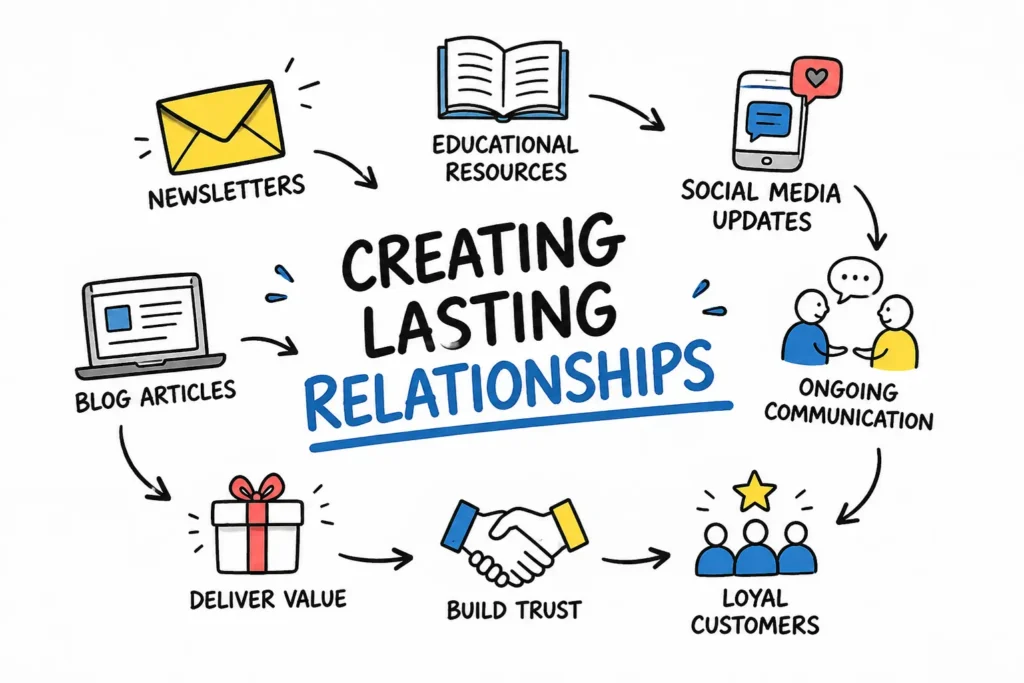
Creating Lasting Relationships
Successful businesses understand that marketing is not only about attracting first-time buyers.
Content marketing encourages ongoing communication with customers through newsletters, educational resources, social media updates, and fresh blog articles.
Every interaction provides another opportunity to deliver value, answer questions, and strengthen relationships.
Customers who continue learning from a business after their first purchase are often more likely to return, recommend the brand to others, and become loyal supporters.
Improving Online Visibility
Content marketing also contributes to better online visibility.
Whenever businesses publish high-quality articles or other useful resources, they create additional opportunities for people to discover their website through search engines.
Instead of depending on a few service pages, businesses build a growing collection of informative content covering different topics related to their industry.
For example, a freelance digital marketer might publish articles about:
- Search Engine Optimization
- Google Ads
- Meta Ads
- Email Marketing
- YouTube Marketing
- Social Media Marketing
- Keyword Research
- Website Analytics
Each article gives the website another chance to appear in search results when users look for related information.
Over time, this expanding library of content helps attract a broader audience while strengthening the website’s overall online presence.
Demonstrating Expertise Without Aggressive Promotion
Many people dislike advertisements that focus entirely on selling. Educational content offers a different approach.
Instead of repeatedly asking customers to purchase something, businesses provide useful information that allows readers to understand industry concepts, compare options, and solve everyday challenges.
This approach positions the business as a helpful resource rather than simply another company competing for attention.
As audiences continue benefiting from this information, they naturally become more interested in learning about the products or services offered by the business.
Creating Customer Engagement
Content marketing creates opportunities for businesses to interact with their audience rather than simply delivering promotional messages. Readers who find value in an article may leave comments, ask questions, share the content with others, or subscribe for future updates. These interactions help businesses better understand customer interests while building stronger relationships.
As engagement grows, businesses can gather valuable feedback that helps improve future content and better address audience needs. Meaningful conversations also encourage a sense of community, making customers feel more connected to the brand.
Businesses can encourage engagement by:
- Responding to comments and questions.
- Inviting readers to share their opinions.
- Creating interactive social media posts.
- Publishing content based on customer feedback.
- Encouraging newsletter subscriptions.
How Content Marketing Supports Every Stage of the Customer Journey
Customers rarely make purchasing decisions immediately after discovering a business. Most people move through several stages before becoming paying customers. They first become aware of a brand, then gather information, compare different options, and finally decide whether to make a purchase.
Content marketing supports each of these stages by providing useful information at the right time. Educational blog posts can introduce a business to new audiences, while comparison articles and case studies help potential customers evaluate their options. Tutorials, FAQs, and product guides answer common questions that may otherwise prevent someone from making a purchase.
Even after becoming customers, people continue to benefit from helpful content. Businesses can publish user guides, newsletters, and educational resources that improve the customer experience and encourage long-term loyalty. This makes content marketing an effective strategy for supporting the complete customer journey rather than focusing only on sales.
Supporting Long-Term Business Growth
Unlike paid advertisements that stop generating results when the campaign ends, content marketing can continue delivering value long after it has been published. A well-written blog article, helpful video, or downloadable guide can attract new visitors for months or even years through search engines and social media.
As the amount of quality content grows, businesses create a valuable digital resource that continuously supports their marketing efforts. This long-term approach helps increase website traffic, strengthen brand recognition, and generate opportunities for future business growth.
Some long-term benefits include:
- Continuous organic website traffic.
- Improved search engine visibility.
- Greater customer trust.
- Higher brand recognition.
- Increased opportunities for lead generation.
- Better support for other marketing activities.
The Role of Consistency in Content Marketing
Publishing one excellent article may create temporary interest, but long-term success usually comes from consistency. Businesses that regularly publish valuable content remain visible to both search engines and their audience.
Consistent publishing also helps build familiarity. When readers repeatedly discover useful information from the same business, they become more confident in its expertise. Over time, this consistent communication strengthens brand recognition and increases the likelihood that customers will choose the business when they need related products or services.
Creating a content calendar can help businesses maintain a regular publishing schedule while ensuring that different topics are covered throughout the year.
Creating a Successful Content Marketing Strategy
Producing content without a clear plan may not deliver the desired results. A successful content marketing strategy begins by understanding the target audience and identifying the topics that are most relevant to them.
Businesses should focus on creating content that answers common questions, solves problems, and provides useful insights rather than concentrating only on product promotion. Consistency, quality, and relevance are essential for maintaining audience interest over time.
A practical content marketing strategy may include:
- Defining business objectives.
- Researching audience interests.
- Planning a content calendar.
- Publishing consistently.
- Optimising content for search engines.
- Measuring performance and making improvements.
Measuring the Success of Content Marketing

Publishing valuable content is only the beginning. Businesses should regularly evaluate how their content performs to understand what resonates most with their audience.
Important performance indicators include:
- Website traffic.
- Time spent on each page.
- Search engine rankings.
- Social media shares.
- Comments and audience engagement.
- Newsletter sign-ups.
- Lead generation.
- Conversion rates.
Analyzing these metrics helps businesses identify successful content and refine future marketing strategies for even better results.
Conclusion
Content marketing is more than a promotional technique; it is a long-term strategy for building meaningful relationships with customers. By consistently creating informative, relevant, and engaging content, businesses can demonstrate their expertise, strengthen brand authority, and earn the trust of their audience.
As customers continue to rely on online information before making purchasing decisions, businesses that invest in high-quality content are better positioned to attract new visitors, improve their online visibility, and encourage long-term customer loyalty. When supported by a clear strategy and consistent publishing, content marketing becomes a valuable asset that contributes to sustainable business growth.
Author : Gopika
Hi, this is a comment.
To get started with moderating, editing, and deleting comments, please visit the Comments screen in the dashboard.
Commenter avatars come from Gravatar.